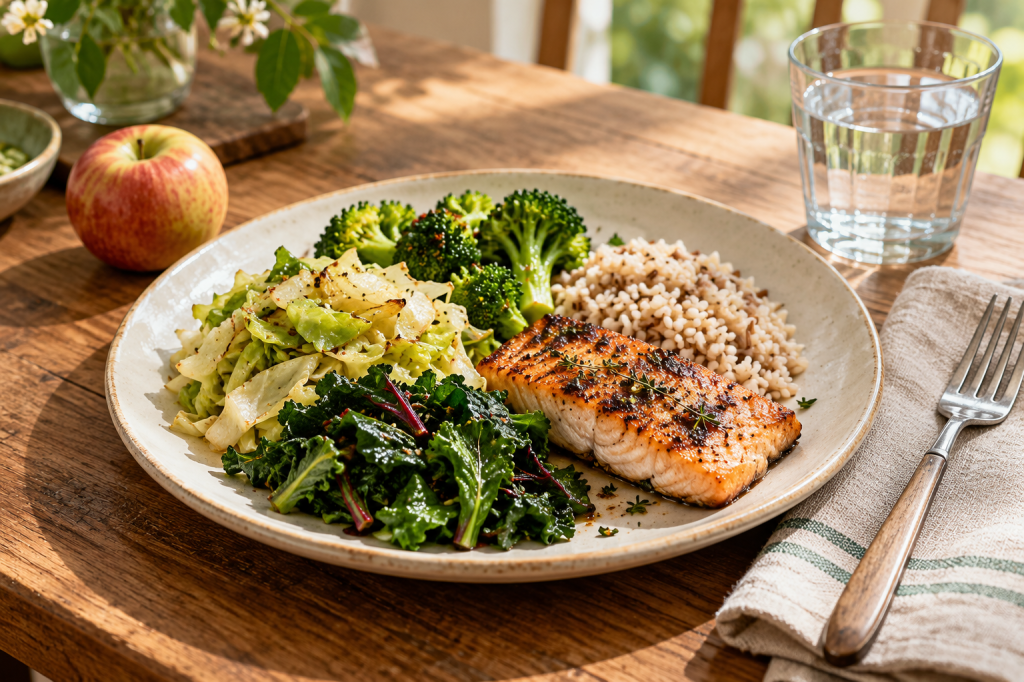
A bowl of rice sits on the table beside vegetables and a piece of fish. There is no cake, no candy, and no sugary drink.
So why does this meal still matter when we talk about blood sugar?
For many of us, diabetes brings one ingredient to mind: sugar. We picture desserts and the spoonful we stir into coffee. But everyday foods deserve a place in the conversation, too.
Understanding them can make the dinner table feel less confusing.
Sweetness does not tell the whole story
Carbohydrates include sugars, starches, and fiber. Sugars and starches raise blood glucose; fiber behaves differently and does not raise it in the same way.
That is why foods such as rice, bread, noodles, and potatoes matter even when they do not taste sweet. When reading a food label, look at the serving size and total carbohydrate—not just the sugar line. The amount you actually eat matters, too.
This gives us a more useful question to bring to dinner: How much carbohydrate is in this meal, and what else is on the plate?
There can still be room for rice
Rice can carry memories of home, family, and meals shared over many years. A conversation about diabetes should make room for that.
One practical starting point is the American Diabetes Association’s plate method. On a roughly nine-inch plate, aim for half non-starchy vegetables, one-quarter lean protein, and one-quarter carbohydrate foods.
For a familiar dinner, that might mean broccoli and cabbage, fish or tofu, and a portion of rice. It is a framework to adapt, rather than a prescription that fits everyone.
You can still recognize your own cooking on the plate.
Fruit does not need to disappear
An apple can become surprisingly complicated when every sweet taste starts to feel suspicious.
Whole fruit can fit into a diabetes eating plan. It provides fiber and nutrients, while still contributing carbohydrates that count toward the meal or snack.
Form matters: fruit juice generally raises blood sugar faster than whole fruit. Portion matters as well. A modest serving and a large bowl are different amounts, even when both contain the same fruit.
Look at the meal around the carbohydrate
A slice of bread eaten alone and bread served with eggs and vegetables are different meals. Protein, fat, and fiber eaten alongside carbohydrate can slow how quickly blood sugar rises.
That does not erase the carbohydrate or make portions unlimited. It simply helps explain why looking at the whole meal is useful. For everyday drinks, water or unsweetened tea can replace a sugary beverage.
A personal plan matters more than a perfect food list
There is no single carbohydrate target that suits everyone. A diabetes care team or registered dietitian can help tailor portions to individual needs and treatment.
If you use insulin or certain diabetes medicines, skipping meals or sharply reducing carbohydrates can cause low blood sugar. Discuss major changes with your care team rather than adjusting medication on your own.
Keep a little kindness at the table
People living with diabetes deserve meals they enjoy and support that respects their daily lives.
We can ask about portions without judging a person. We can learn to read a label without turning every grocery trip into an exam. And we can talk about rice, bread, and fruit without making anyone feel ashamed of the food they grew up eating.
A helpful first step might be looking more closely at one familiar meal.
What is already working? What could you adjust? What would make it satisfying enough to enjoy again tomorrow?
This article provides general education, not an individualized treatment plan. Food choices support diabetes care and do not replace prescribed treatment.


Leave a Reply