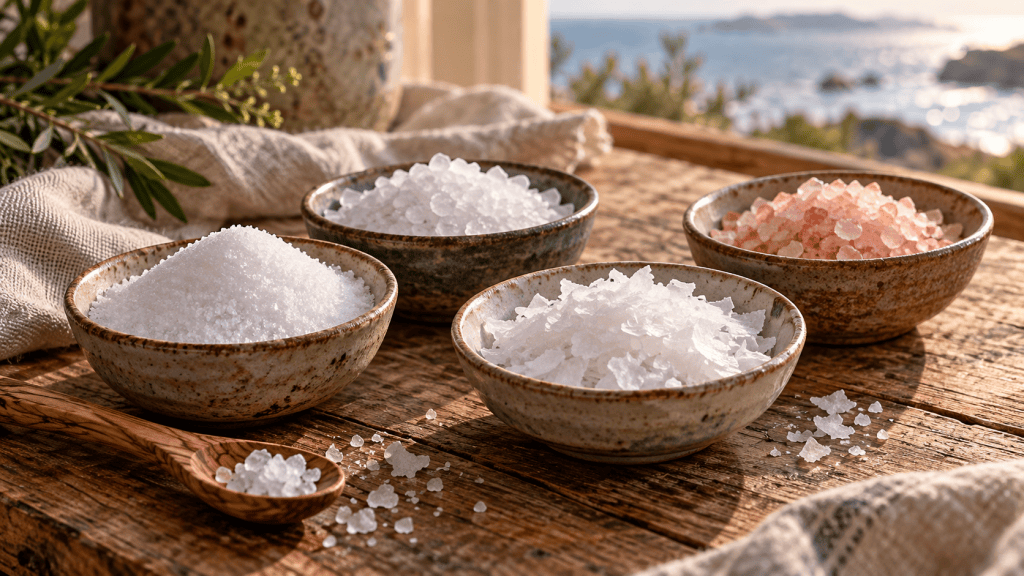
A small crystal, a powerful history, and a closer look at what we sprinkle on dinner.
In March 1930, Mahatma Gandhi began walking toward the sea.
His destination was Dandi, a coastal village in India. His protest centered on something found in kitchens everywhere: salt.
After a journey of roughly 240 miles, Gandhi defied British salt laws by collecting natural salt at the shore. This everyday ingredient became a symbol of resistance to colonial rule.
Today, standing in a supermarket aisle, salt can seem almost ordinary. Yet the shelves offer a surprising range of choices: inexpensive table salt, coarse kosher salt, sea salt, delicate flakes, and pink crystals in elegant jars.
What are we actually choosing?
Follow the crystal
Start with texture.
Fine salt mixes easily into food. Coarser crystals and thin flakes create a different experience when sprinkled over a finished dish—a little crunch and a concentrated salty bite.
That makes the purpose worth considering. Are you seasoning a pot of soup, or adding a final touch to roasted vegetables? An interesting texture is easier to appreciate when the salt remains on the surface.
One spoonful is not always another spoonful
Different crystal shapes pack differently into a measuring spoon. A teaspoon of fine salt can hold more salt by weight than a teaspoon of large, airy crystals.
When changing salt types—or even brands—check the recipe’s instructions. For precise comparisons, weight is more useful than spoon volume.
Look past the color
Pink salt is beautiful. Sea salt can carry an appealing story about where it was harvested. Neither quality automatically makes it a healthier choice.
Ordinary culinary salts have broadly similar sodium content by weight. The trace minerals in specialty salts generally do not provide a substantial nutritional advantage at normal serving amounts. Some table salts also contain added iodine; check the label rather than assuming.
Choose a specialty salt because you enjoy its texture, flavor, or the way it finishes a dish. A higher price is not proof of better nutrition.
A small experiment for a fall evening
Roast a sweet potato or a tray of squash with little or no added salt.
Taste a piece plain. Add a few grains of finishing salt to another piece. Notice what changes: the first impression, the texture, the balance of the bite.
The point is to pay attention, not to keep adding more.
Back to Gandhi’s handful
For Gandhi, salt became a way to challenge control over an everyday necessity. In our kitchens, it offers a smaller invitation: look more closely at something familiar.
Before buying the most impressive jar, ask what you need it to do.
Sometimes an ordinary salt is exactly right. Sometimes a few delicate flakes are worth enjoying.
The detective work begins with knowing the difference.
— Real Food Detective
What salt do you keep in your kitchen—and what made you choose it?


Leave a Reply