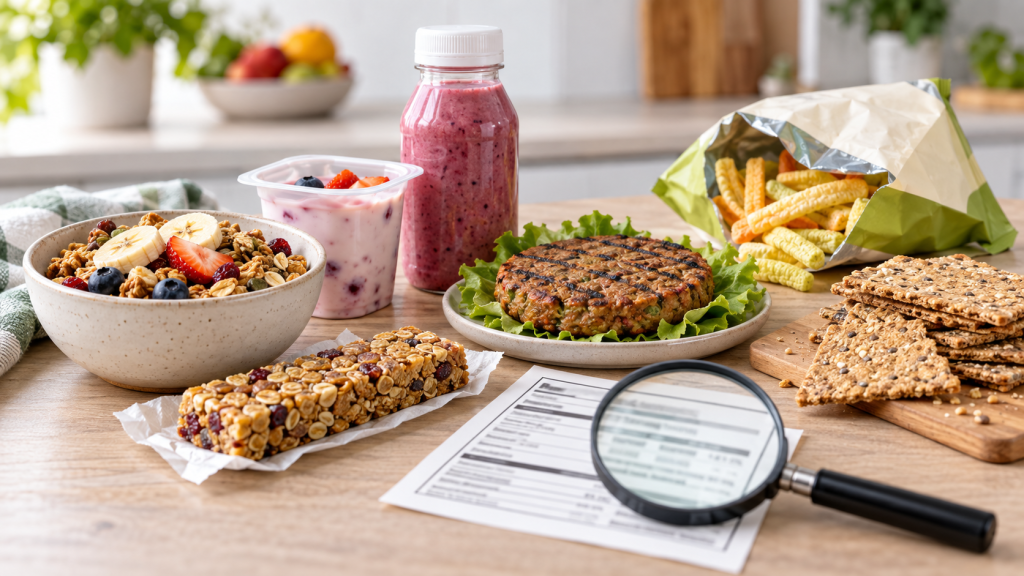
Food packaging can be very convincing.
Words such as “natural,” “whole grain,” “low-fat,” “high protein,” and “plant-based” can make a product appear healthy. However, these claims do not always tell the whole story. Some products marketed as healthy may contain large amounts of added sugar, refined ingredients, sodium, and other highly processed ingredients.
Not every packaged food is unhealthy. The key is to look beyond the front of the package and examine what the food actually contains.
Here are seven foods that may be more processed than they appear.
1. Granola
Granola is often presented as a natural and nutritious breakfast. However, many commercial granolas contain added sugar, syrups, refined oils, chocolate, or sweetened dried fruit.
A small serving can contain much more sugar and calories than expected.
When choosing granola, check:
- The amount of added sugar
- The recommended serving size
- Whether oats, nuts, and seeds are the main ingredients
- Whether sugar or syrup appears near the beginning of the ingredient list
A simpler choice is granola made mainly with oats, nuts, and seeds with little added sugar.
2. Flavored Yogurt
Plain yogurt can be a good source of protein, calcium, and beneficial bacteria. Flavored yogurt, however, may contain a surprising amount of added sugar.
Some fruit-flavored yogurts contain very little actual fruit. Their sweetness and color may come mainly from sugar, fruit concentrates, flavoring, or coloring.
Try choosing plain yogurt and adding fresh fruit, nuts, cinnamon, or a small amount of honey yourself.
3. Protein Bars
The word “protein” can make a snack bar sound automatically healthy. But some protein bars are nutritionally similar to candy bars.
They may contain syrups, sugar alcohols, refined oils, artificial flavors, and long lists of processed ingredients.
Before buying a protein bar, compare:
- Protein
- Added sugar
- Fiber
- Total calories
- The first three ingredients
A bar made primarily from nuts, seeds, oats, and dried fruit is usually easier to understand than one made from many refined ingredients.
4. Bottled Smoothies and Fruit Drinks
Pictures of fresh fruit can make bottled smoothies and fruit drinks look like healthy choices. However, many of these drinks contain juice concentrates, added sugar, or very little fiber.
Drinking fruit is not always the same as eating whole fruit. Whole fruit usually contains more fiber and takes longer to consume, which may help you feel satisfied.
Check whether the drink is made from whole fruits and vegetables or mainly from juice concentrates and sweeteners.
5. Plant-Based Meat Products
Plant-based foods can be part of a healthy diet, but “plant-based” does not always mean minimally processed.
Some meat substitutes contain protein, but they may also contain refined oils, modified starches, flavor enhancers, coloring, and high levels of sodium.
Less-processed plant-based protein sources include:
- Beans
- Lentils
- Tofu
- Nuts
- Seeds
- Chickpeas
The term “plant-based” should not replace reading the ingredient list.
6. Whole-Grain Crackers and Snacks
A package may say “made with whole grains” even when the product is made mostly from refined flour.
Turn the package around and look at the first ingredient. If whole wheat, oats, or another whole grain is not listed first, the product may contain only a small amount of whole grain.
Also check the sodium, added sugar, and refined oils. A whole-grain claim alone does not make the entire product healthy.
7. Low-Fat and Fat-Free Foods
For many years, shoppers were encouraged to choose low-fat or fat-free products. But when manufacturers remove fat, they sometimes add sugar, starch, salt, or flavoring to improve taste and texture.
As a result, a low-fat product may be more processed than the original version.
Instead of focusing only on fat, examine the entire nutrition label and ingredient list.
Watch Out for the “Health Halo”
A health halo occurs when one positive claim makes the entire product seem healthier than it actually is.
Be cautious when you see claims such as:
- Natural
- Made with real fruit
- Multigrain
- Low-fat
- No cholesterol
- High protein
- Gluten-free
- Plant-based
These claims may be technically true, but they do not tell you how much sugar, sodium, refined flour, or other processed ingredients the product contains.
Three Things to Check Before Buying
Before purchasing a packaged food, check these three things:
1. The First Three Ingredients
Ingredients are generally listed by weight. The first few ingredients often tell you what the product is mainly made from.
2. Added Sugar
Look at the amount of added sugar and compare it with the serving size. Remember that the package may contain more than one serving.
3. The Entire Ingredient List
Ask yourself whether the product is mainly made from recognizable foods or from refined ingredients and additives.
A long ingredient name does not automatically mean something is harmful. The goal is to understand the overall product instead of relying only on advertising claims.
Final Thought
Healthy eating does not require perfection, and not every processed food needs to be avoided.
The goal is to recognize the difference between useful convenience and misleading marketing. When you read both the nutrition facts and the ingredient list, you can choose food based on what it actually contains—not simply on what the package promises.
Read the front. Check the back. Know what you are eating.


Leave a Reply